
AI Enablement Services
Make your codebase, docs, tests and tickets ready for AI — so agentic coding ships trustworthy work instead of confident-sounding mess.
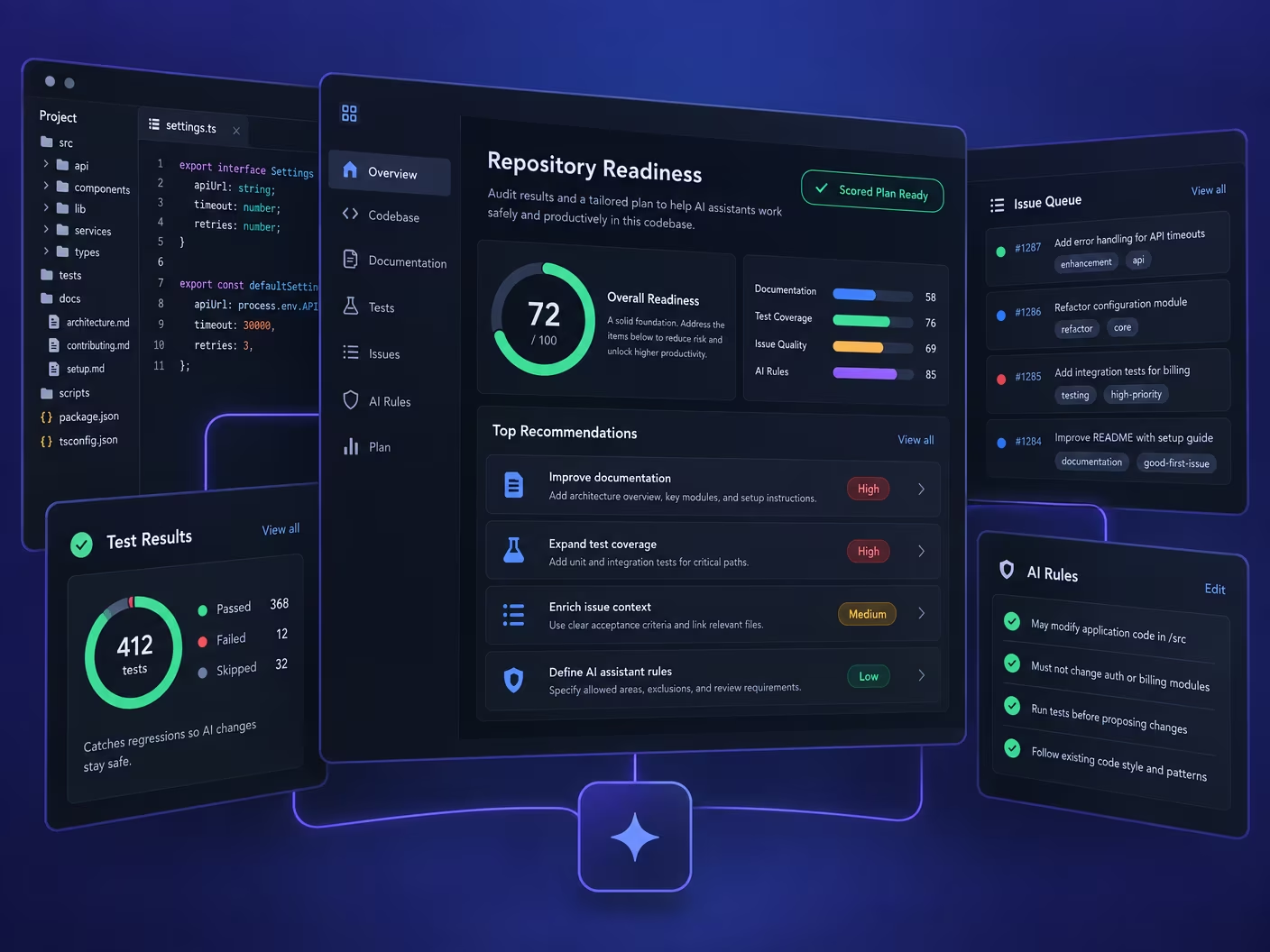
AI Enablement
AI enablement is the work of making an organization genuinely able to use artificial intelligence — not the licenses, the readiness. Most companies that adopted their stack before the AI era discover the same thing: the AI tools work, but the AI projects don't, because the engineering assets underneath were never shaped for it. Licenses were bought, pilots ran, and the promised business value never arrived.
SWARECO's AI enablement service takes a company from "we bought AI capabilities" to "AI ships real work here." The focus is concrete: the repository, the documentation, the test suite, the tickets, and the review process — the five assets that decide whether agentic AI produces trustworthy changes or confident-sounding mess.
This is the service behind a claim we make elsewhere on this site: our engineers work with AI under an unchanged review bar. Enabling AI to work safely in a codebase is a setup, not a talent. We build that setup inside client codebases, and we open-sourced the skeleton of it.
AI Enablement Built Around Your Codebase
Generic AI adoption programs start with strategy workshops, use case brainstorms and upskilling programs. Useful, but they skip the question that decides everything for a software company: can an AI agent safely change your product?
For most pre-AI-era codebases the honest answer is no — not because the code is bad, but because the repository doesn't state its own facts, the tests are too thin to catch a wrong change, and the tickets don't define what done means. AI-only pull requests then ship with bugs, drift from the codebase's patterns, or miss the goal entirely. Teams conclude the tools are overhyped, when the real gap was readiness — AI and automation stall on the same missing foundations.
We work on that gap directly. No platform to buy, no organizational restructure — an audit of the five assets, a sequenced plan, and the option to have the same team that runs this working style in production every day build it with you.
From AI Tools Nobody Trusts to AI Work That Ships
The failure mode of half-done AI adoption is not bad code — it is an agent that tells you something false in a completely reasonable tone, and a team that has to check every line because nothing constrains what the model assumes. AI deployment without guardrails is how organizations end up distrusting good tools.
Effective AI enablement inverts that: written facts about the codebase stop wrong assumptions before they start, binary quality gates stop unverified work from merging, and the measurable result is the share of AI-assisted pull requests that merge without a human rewriting them. That number — not license counts — is how we define being AI enabled. And it accelerates: every documented fact and passing test lets the team accept AI-driven changes faster than the last.
How This Benefits Your Business
The outcome is a working system, not a maturity score. Here is what changes.
AI output you can actually accept
With rules files stating the codebase's facts and tests gating every merge, AI-assisted changes stop being a leap of faith. The review process enforces a written contract, so trust is earned by the setup rather than assumed of the tool.
Speed without a lowered bar
The setup streamlines delivery instead of policing it. Walls stop bad work from shipping; rails stop the agent from being confidently wrong. Our largest rules file grew from 33 lines to 252 across ten commits in 28 days — each line added at the exact moment a session assumed something false, so the same mistake cannot happen twice.
Assets that outlive the AI initiative
Documentation a model can read is documentation a new hire can read. Test coverage that makes AI changes safe makes every change safe. The enablement work compounds into engineering quality that pays off regardless of which AI tools win.
A measurable definition of done
Being AI enabled is not a feeling. We instrument the honest metric — what share of AI-assisted pull requests merge without human rewrites — so the business impact of the initiative is visible, not asserted.
What AI Enablement Actually Involves
Our definition is narrower and more useful than the industry's. Most AI enablement content — and every AI enablement platform pitch — is organizational: change management, role-specific training, use case discovery, data quality programs, workflow automation roadmaps for the C-suite. The enablement use cases in those programs are organization-wide; ours are engineering-specific, and they matter for enterprise AI initiatives in a different way. But for a company whose product is software, enablement lives or dies in the engineering workflow, so that is where we work.
The five assets we audit and build
A rules file per repository. SWARECO maintains eight CLAUDE.md files across client repositories on Ruby on Rails, React and React Native. The non-negotiables are identical in every one; everything below is stack-specific. These are living documents — ours grow commit by commit, each addition attached to a ticket.
Documentation that states facts. About half of a good rules file is not instruction but fact — "this repo HAS JS-driven system specs" — written down at the moment an AI session assumed otherwise. A model can only be as correct as what the repository tells it.
Tests as the safety net. Every change ships with a test that exercises real behavior, and the suite runs green before merge. In one repository that means 204 spec files, 29 of them browser system specs running against headless Chromium through Playwright.
Tickets an agent can execute. One unit of work, one ticket, one branch. Our ticket-writing skill runs 402 lines, most of it tables of project facts.
Review gates that do not move. CI is the only thing that can stop a merge — before AI and after. The review workflow reads the same rules file a coding session does, and every finding is resolved before merging.
The stack, and where AI connects
We enable teams on the tools we use ourselves: Anthropic's Claude Code for agentic coding, Model Context Protocol (MCP) servers so assistants can integrate with and operate your systems under controlled permissions, and a component library in Storybook so UI work draws from what exists instead of inventing duplicates. The walls and rails are deliberately tool-agnostic — they shape the behavior of any AI agent, current or future, and they apply whether the workflow uses generative AI for code, natural language processing with large language models over your documents, or machine learning models you deploy in the product itself. It is not an AI platform subscription — it is a practice, standardized across repositories.
Proof you can read before you call us
We open-sourced our working setup at github.com/SWARECO/dotclaude — the rules-file skeleton, a ticket-writing skill template, an audit command, and the pull-request review workflow. The reasoning behind it is public too: Walls and rails for agentic coding documents the framework, and our AI readiness assessment guide explains what to check before you start. Read those, run the audit yourself if you like — or have us do it in a week.
Industries We Serve
Deep industry expertise combined with cutting-edge technology to solve your unique challenges
Why Work With SWARECO for AI Enablement
These companies have relied on us to help expand their engineering teams with top talent who make a real impact.
Companies that trusted us to build and run their engineering.






Case Study
Real results for real clients. Discover how we've helped businesses achieve their digital transformation goals

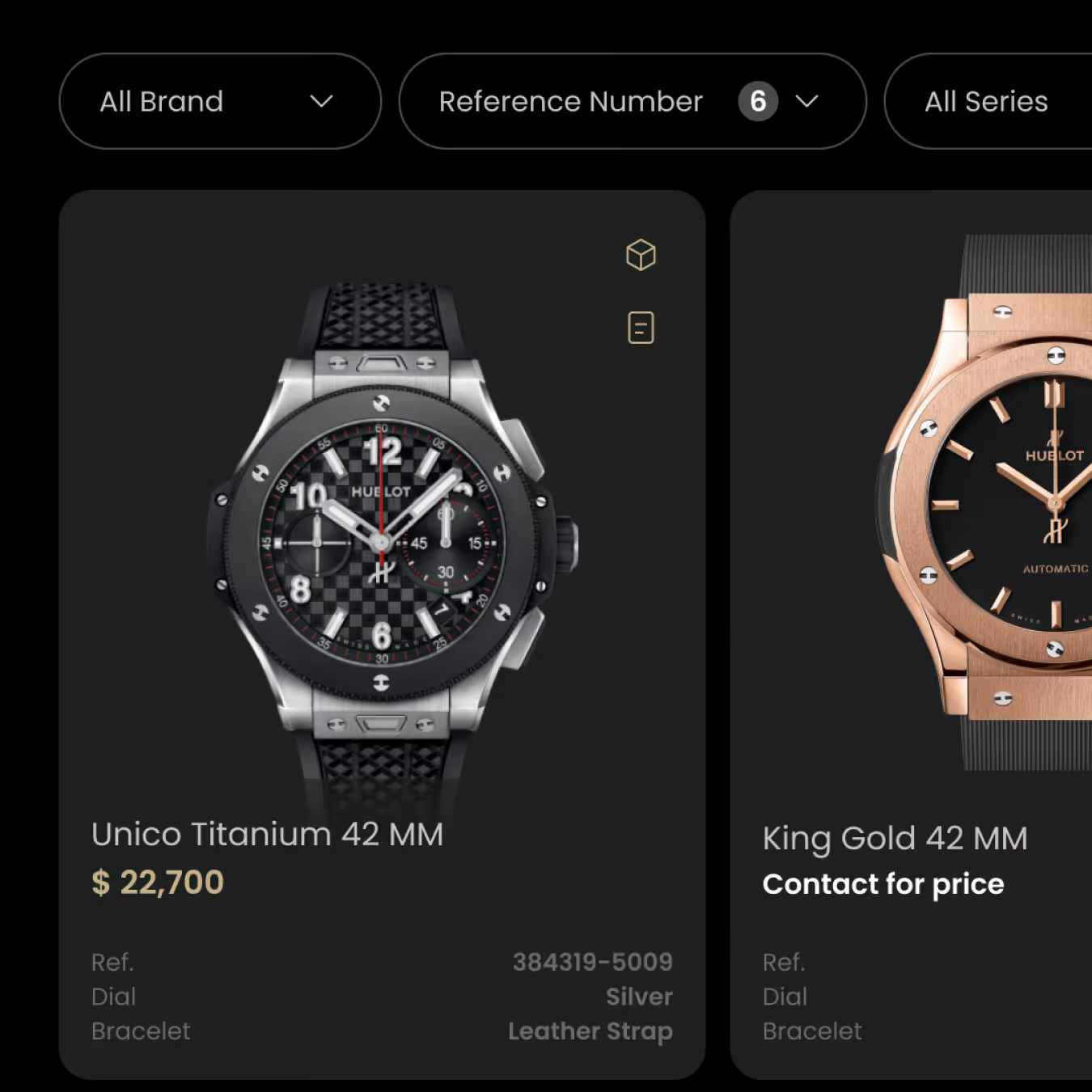
Elefta: Turning a Dealer Prototype into a B2B SaaS Platform Operating Across 30+ Countries
1,628 users, 534 organizations, 30+ countries: SWARECO rebuilt Elefta's watch-dealer prototype into a scalable B2B SaaS inventory management platform.
FAQs
What is AI enablement?
AI enablement is the work that makes an organization able to use AI effectively — beyond buying tools. For an engineering team it means shaping five assets so AI produces trustworthy work: the repository, the documentation, the test suite, the tickets, and the review process. SWARECO audits those five, delivers a sequenced plan, and can build it with you.
What does it mean to be AI enabled?
Our definition is measurable: an AI-enabled engineering team is one where AI-assisted pull requests routinely merge without a human rewriting them, because written codebase facts prevent wrong assumptions and binary quality gates stop unverified work — no AI model can be more correct than what the repository tells it. License counts and training hours don't measure enablement; that merge rate does.
How is AI enablement different from AI adoption or implementation?
Adoption is deciding to use AI and rolling out tools; implementation is wiring AI into a product or workflow — AI implementation and AI transformation programs both assume it. Enablement is the layer that makes both succeed: the codebase facts, tests, ticket discipline and review gates that let AI work be trusted. Skipping it is why so many AI initiatives stall after the pilot.
How long does AI enablement take?
Weeks, not quarters, because the work is incremental and per-repository. Rules files and ticket shape land in days — one of ours grew from 33 lines to 252 over 28 days of normal work, no pause in feature delivery. Test coverage is the long pole: if it is thin, that is most of the engagement, and it pays off regardless of AI.
What are the common challenges in AI enablement?
Three recur: repositories that don't state their own facts, so agents invent assumptions; test suites too thin to make AI changes safe to accept; and tickets too vague for an agent to execute. All three are fixable without a rewrite and without new AI systems — the enablement work layers onto the codebase and AI solutions you already have.
Other Services
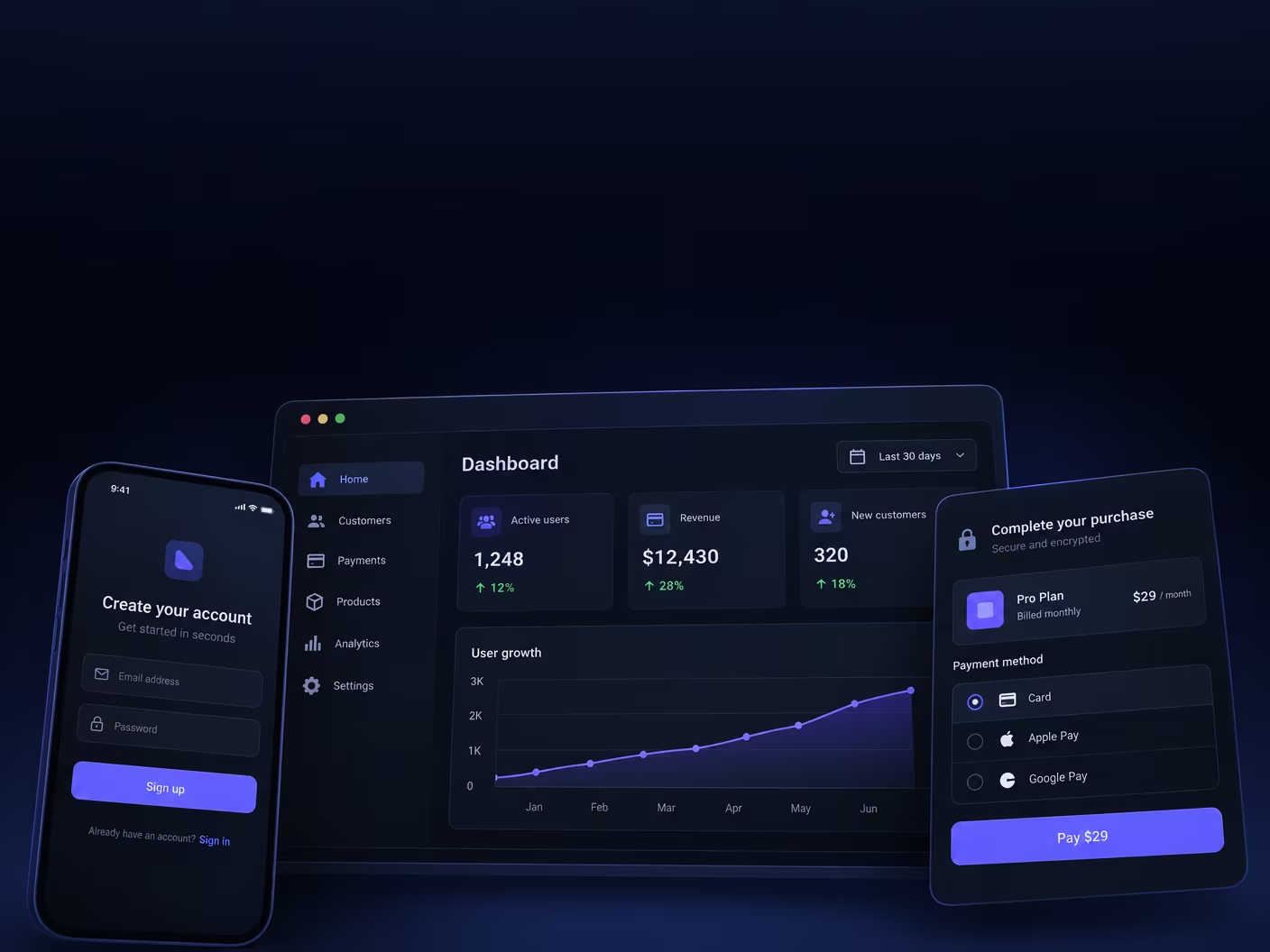
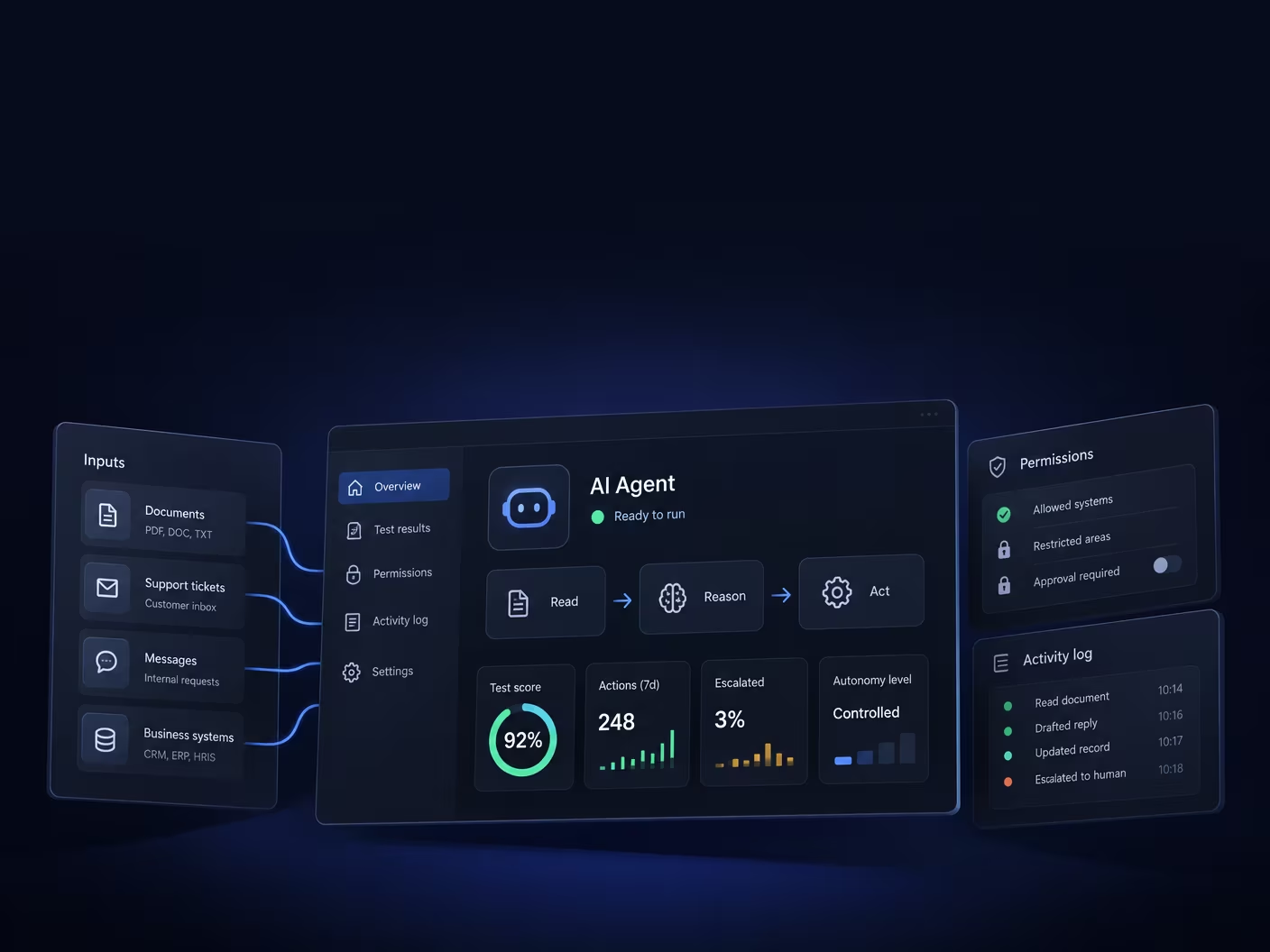
Find out what your codebase needs before AI can work on it.
A read-only readiness audit that ends with a scored plan and a sequenced budget — whether or not you build it with us.