
Custom Software Development & Dedicated Nearshore Teams
Web platforms, ecommerce, mobile apps and enterprise systems, built by a dedicated nearshore team on US hours.
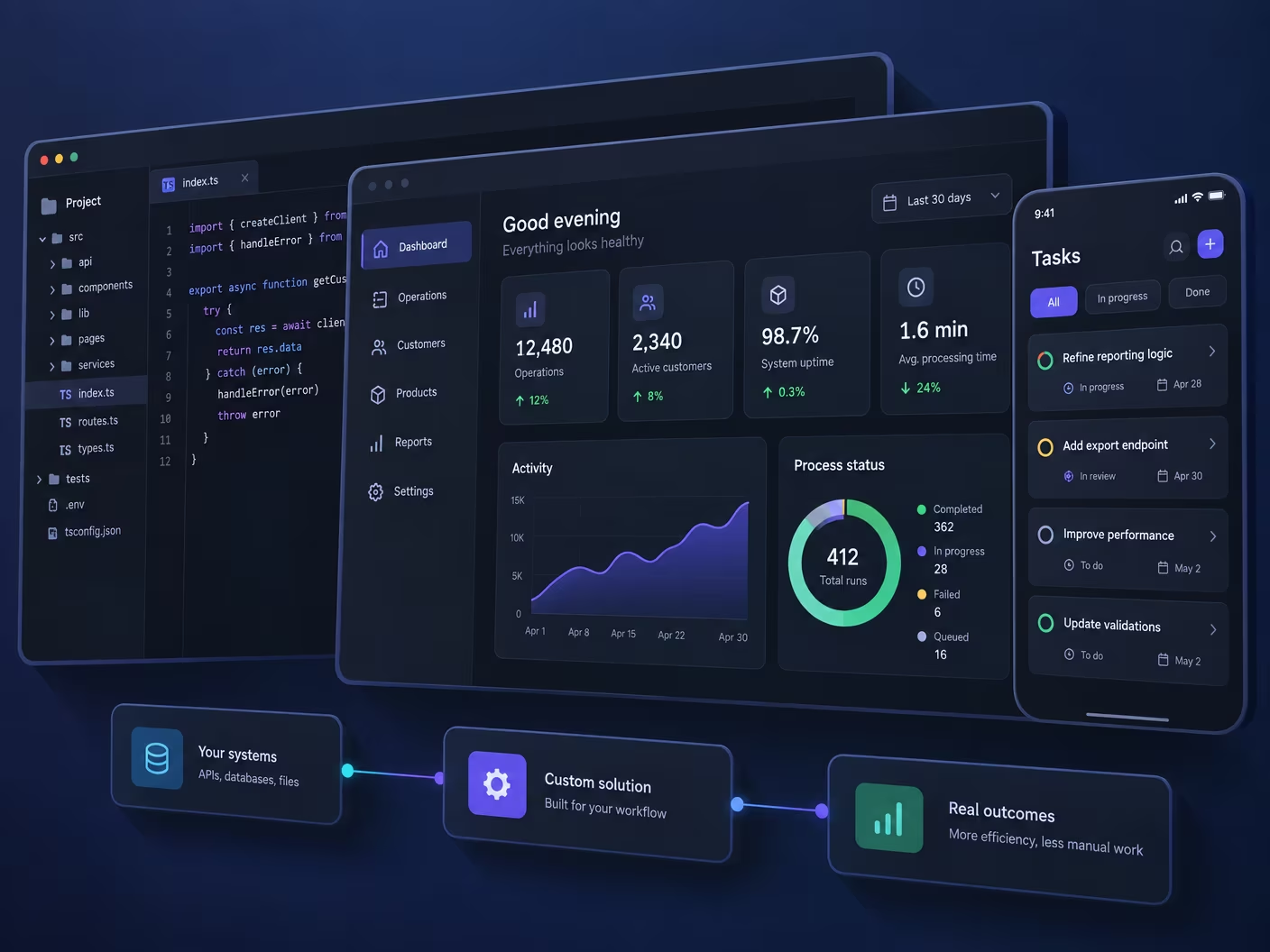
Custom Software Development
Most software forces your team to work around it. You adapt your processes, build workarounds, and accept limitations because that's what the tool allows. The problems this creates are small at first. Over time, they compound.
Custom software works the other way around. It is built for the exact way your business operates... your workflows, your rules, your data, and your goals. No unnecessary features. No compromises. Just a system that fits.
We build custom software for companies that have outgrown generic tools and for founders who need something purpose-built from day one. What makes our work different is that we think about architecture and long-term performance from the start. We do not just ship features. We build systems that can grow with you.
The same dedicated team builds web platforms and online stores, mobile apps, and enterprise systems such as custom CRM and ERP, and it works as a nearshore team on US hours.
Custom Software Development Built Around Your Business
Every company has processes, data flows, and constraints that off-the-shelf software handles poorly. Whether you need a new platform built from scratch, a replacement for a legacy system, or a specialized internal tool, the priority is always alignment with how your business works.
We build custom software that:
- Matches your exact workflows and business logic
- Connects to your existing tools and data sources
- Grows with your product and scales as your user base expands
We approach every project as a long-term investment, not a one-time build. The result is software that feels like it was made for your team... because it was.
Software That Handles Growth Without Breaking
As a business grows, so does the complexity it runs on. More users, more data, more rules, more systems that need to talk to each other. Off-the-shelf tools often break under this pressure... or require expensive workarounds that create new problems.
Custom software solves these issues at the root. Built with the right architecture from day one, it stays reliable as you scale, reduces technical debt over time, and lets you focus on running your business rather than fighting your tools.
How This Benefits Your Business
Off-the-shelf software makes you work the way it was designed. Custom software works the way your business already does, which is usually the reason you outgrew the alternative.
The system fits the process, not the reverse
No workarounds, no spreadsheet running alongside the tool that was supposed to replace it, no paying for modules you will never switch on.
It stays cheap to change
Modular architecture and real test coverage mean the second year of changes costs less than the first. Software that is expensive to modify stops getting modified, and then it stops being useful.
You own it
The code, the data and the deployment pipeline are yours. No per-seat pricing that scales against you, and no vendor deciding your roadmap.
One team across web, mobile and enterprise
The same dedicated team builds the web platform, the mobile app and the internal systems behind them, so the integration seams that usually fail between three vendors are one accountable scope.
Capabilities
Languages and Frameworks: Node.js, Python, Java, Ruby on Rails, React, Next.js, Angular, Vue.js
Architecture: API-first, microservices, event-driven, monolithic where appropriate
Data: SQL, NoSQL, data warehouses, real-time processing
Cloud and Infrastructure: AWS, Google Cloud, Azure, hybrid and on-premise
Integrations: CRMs, ERPs, payment gateways, third-party APIs, legacy systems
Additional: DevOps and CI/CD pipelines, automated testing, security practices, compliance support
The stack behind SWARECO's custom software
Most of what we ship runs on Ruby on Rails with React and TypeScript, PostgreSQL as the system of record, Sidekiq and Redis for background work, Elasticsearch or OpenSearch for search, and Docker on AWS or Heroku underneath, with Playwright guarding the flows that matter. Software engineering discipline, not framework variety, is what keeps a custom system cheap to change in year three. Mobile app development uses React Native on the same backends, and integrations cover Salesforce, HubSpot, Shopify, NetSuite and Google services as standing capability. Where AI genuinely helps - document extraction, classification, assistance inside a workflow - we integrate OpenAI, Anthropic Claude or Google Gemini APIs behind your permission model, and we use AI-assisted code comprehension to take over and modernize existing codebases faster than reading them cold.
How we build it
The development process begins with the question most software development companies skip: whether custom software is justified at all. Discovery maps the workflow, what off-the-shelf tools already cover, and where the business genuinely differs. If a configured SaaS product does the job, we say so - custom software development services earn their cost only where the process is truly yours.
When the build is justified, scope gets decided by a rule: the first release must replace one real workflow end to end. Not a module, not a foundation - a working custom software solution some team uses on day one. Everything else is sequenced behind evidence from that first release, which is how development teams avoid the year-long project that ships nothing.
Engineering runs in two-week increments against a working deployment. Every increment ends with software you can use, not a status report, so a non-technical stakeholder gets a concrete decision point every two weeks. Each developer works in the same stack we run everywhere - which is why our estimates come from experience rather than optimism - and automated tests accumulate with the features, so month six moves as fast as month one.
Integration is treated as first-class scope, because enterprise software that cannot talk to your CRM, your ERP and your existing databases just creates another silo. The data map - which system owns which field, what happens on conflict - is written before the code, and application development follows it.
After launch, the software either transfers cleanly or stays with us, and both are real options. Handover includes documentation, the test suite, deployment runbooks and a codebase a new software developer can join without archaeology. Clients who prefer a standing development partner keep the same team on maintenance, monitoring and the next release - a deliberate contrast with custom software development companies whose economics depend on you never leaving.
What our custom software development services cover
End-to-end custom software development, from product development and MVP development through platform development, enterprise software development and custom CRM, to API development, software integration services, ecommerce development, mobile development and the software modernization of legacy software. Bespoke software, tailor-made software and custom software solutions are the same thing under different names: software tailored to one business, built by a nearshore software development team through an agile software development lifecycle, with support and maintenance services after launch. Our developers work as one software development partner across all of it, which is what keeps the integrations and the cloud services one accountable scope.
Enterprise applications: CRM, ERP and internal systems
Enterprise application development at SWARECO covers the systems a business runs on: customer relationship management that models a sales process the generic CRM cannot, operations and supply chain tools that track inventory and fulfilment in real time, data platforms that give a large organization one version of the truth, and workflow software that connects functions which currently coordinate by email. Complex business rules are the common thread. That is what makes these systems worth building rather than buying.
Not every need requires new enterprise software. Extending an existing CRM or ERP is often faster and cheaper, and we do that work too: custom objects and flows in Salesforce, custom records and scripts in NetSuite. The honest test is whether the process you need is a variation of what the platform already models, or genuinely different from it. Fighting a platform's data model with customization costs more over five years than building the thing that fits, and recognizing which situation you are in is most of the value of the first conversation.
Security and compliance are standing scope: role-based access control, single sign-on against your existing identity provider, and an append-only audit trail of who changed what and when. If the business is subject to a specific regime, say which one at the start. The evidence a framework expects changes the data model and the logging, and those are the two most expensive things to change afterwards.
Web platforms and ecommerce
Web application development and ecommerce development split into two honest categories: Shopify work, and custom builds where the store's requirements have outgrown what any ecommerce platform models. For most retail businesses Shopify is the right answer, because checkout, payments, tax and PCI compliance are solved problems you should not pay a development team to rebuild. Our Shopify work is the part the platform does not give you: custom storefront themes, apps for the workflow that is specific to your business, and the integrations around the store, with orders and inventory syncing into NetSuite and customer data flowing to Salesforce or HubSpot.
Custom ecommerce development earns its cost when commerce is genuinely custom: B2B pricing that depends on contracts, configurable products, marketplace mechanics, or an order lifecycle no platform models. There we build the storefront and back office on Ruby on Rails, React and TypeScript with PostgreSQL, often headless, with Shopify still handling checkout behind a custom front end. Sidekiq and Redis run inventory sync, order routing and abandoned-cart flows, and Elasticsearch or OpenSearch powers product search that converts. Every build is tested end to end with Playwright, from browse to cart to checkout to refund, and site speed is treated as a revenue feature, not a technical nicety.
A marketing site that has outgrown WordPress or Webflow is a different job. That is our website redesign service, which rebuilds the site as a codebase you own.
Mobile apps
Mobile app development starts with a decision most mobile app development companies skip: whether you need an app at all. If the product has no business on a phone, with no camera, no location, no push notifications and no offline use, a responsive web app is cheaper to build and to keep alive, and we will say so before quoting. Custom mobile apps earn their cost when they use what the device offers.
When an app is the right answer, we build one codebase, not two. React Native with TypeScript ships a native experience on iOS and Android from a single codebase, roughly 30 to 40 percent less engineering than parallel native builds. The backend is half of every mobile app and the half that usually fails first, so the API is Ruby on Rails on PostgreSQL, with Sidekiq handling push notifications, feed generation and sync. The app assumes the network will disappear: requests retry, writes queue offline, and state reconciles when the connection returns. App Store and Google Play submission, staged rollouts and the year-after maintenance that app stores impose are part of the engagement, not an afterthought. A focused first release typically runs 12 to 20 weeks.
What custom software development costs, and how to choose a company
The cost of custom software development is driven by three things: how many screens or workflows carry real business logic, how much the backend has to do (integrations, reporting, background jobs), and how much of the work is new versus extending software solutions you already run. A useful way to sanity-check any quote is to recompute it: team size, multiplied by months, multiplied by a loaded monthly engineering rate. A focused first release from a small development team typically runs 12 to 20 weeks; enterprise systems with several integrated modules run 6 to 12 months. We publish the drivers in more detail in our guide to custom software development cost, and every SWARECO proposal shows the year-two number, maintenance included, not only the build.
Lists of the top custom software development companies rank vendors by size and review count, which says little about whether one is right for your project. Four questions separate a development partner from software development companies selling hours: who owns the code and the deployment pipeline when the project ends (with SWARECO, you do, from day one); how the estimate was produced and by which developer; what the team's last three development projects shipped in their first release; and who maintains the custom software solution in year two. The answers predict your total cost better than the quote does.
The industries we build for most are financial services and fintech, healthcare, legal technology, real estate, media and entertainment, B2B commerce and enterprise operations, and the same custom software development services apply to every one of them: the app development pattern is the same, the business rules are not.
A dedicated nearshore team on US hours
Every engagement is staffed as a dedicated development team: senior engineers across Latin America working US hours, led from Los Angeles, on the one stack described above. The team overlaps your working day, uses the same Rails, React and PostgreSQL toolchain on every project, and stays with the product after launch. Our engineers build with Claude Code and AI-assisted review as standing practice, and where a feature genuinely benefits from AI, the OpenAI, Anthropic Claude or Google Gemini APIs sit behind your permission model, never in the client binary. The same multi-round interview that staffs our teams is available as technical recruiting when you want to hire your own.
Related services: MVP Development Services For Non-Technical Founders, Technical Recruiting for AI-Native Engineers, Website Redesign Services: From WordPress and Webflow to Code You Control and Business Process Automation & Integrations.
Industries We Serve
Deep industry expertise combined with cutting-edge technology to solve your unique challenges
Why Work With Us for Custom Software Development
Custom software is what we know best. We do not build generic solutions and adjust them to fit. We build from the ground up around the actual way your business works.
Every decision we make... architecture, technology choice, feature scope, integration approach... is driven by how the software will be used day to day, how it must perform at scale, and how it needs to evolve as your business grows.
The result is software that your team actually adopts, that stays reliable under real conditions, and that keeps delivering value long after the first launch.
These companies have relied on us to help expand their engineering teams with top talent who make a real impact.
Companies that trusted us to build and run their engineering.






Case Study
Real results for real clients. Discover how we've helped businesses achieve their digital transformation goals

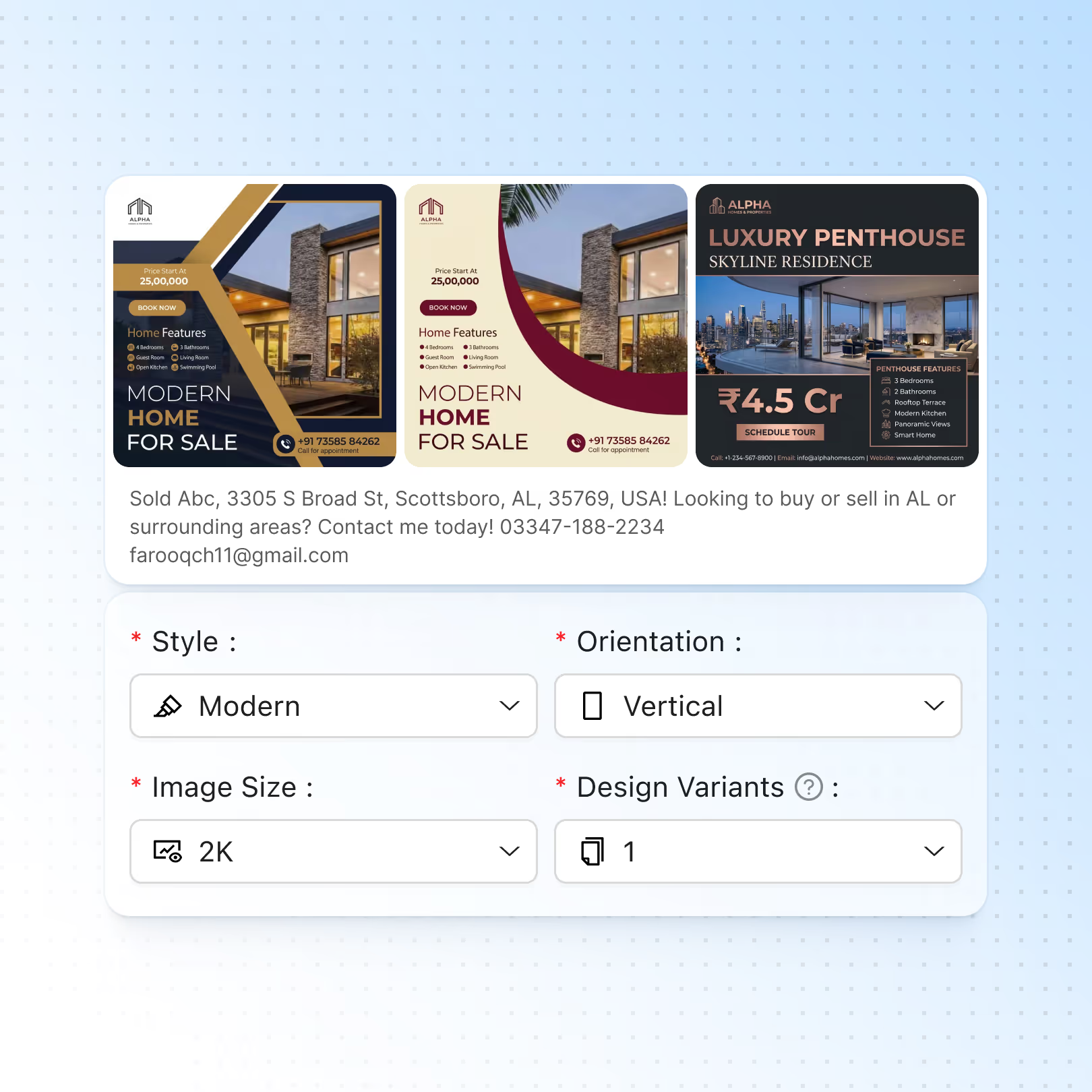
Zentap: How a Real Estate Marketing Agency Went from Manual Operations to a 10x Content Platform
10x content production capacity: SWARECO built Zentap's real estate marketing dashboard and internal ops platform, turning an agency into a product.
FAQs
What is custom software development?
It is the process of designing, building, and maintaining software created specifically for your business processes and requirements, rather than adapting your operations to fit a generic tool.
How is custom software different from off-the-shelf solutions?
Custom software is built around your exact workflows. Off-the-shelf products require you to work around their limitations. For businesses with specific processes or growth goals, the difference in efficiency and long-term cost is significant.
How long does a custom software project take?
Smaller internal tools typically take 12 to 20 weeks. More complex platforms and enterprise systems range from 6 to 12 months. We provide detailed milestones and timelines at the start of every engagement.
Can you integrate with our existing systems?
Yes. Connecting to CRMs, ERPs, legacy software, and third-party APIs is a core part of how we build. Your new system should talk to everything you already run.
Will the software scale as we grow?
Yes. Scalability is designed into the architecture from day one so you can add users, features, and data volume without a costly rebuild later.
Do you provide ongoing support after launch?
Yes. We offer flexible support that includes performance monitoring, updates, security patches, and new feature development. Launch is the beginning, not the end.
How do you handle security and compliance?
Security practices are built in from the first line of code. We follow industry standards and can align with specific requirements like GDPR, HIPAA, or others relevant to your industry.
Can you modernize our existing legacy system?
Yes. We can assess, refactor, and modernize existing software while preserving the business logic that still works. You do not have to rebuild from scratch to get a modern system.
What technologies do you use?
We choose the right stack for your requirements, not our preferences. Common choices include Node.js, Python, Ruby on Rails, React, and major cloud platforms. We match the technology to what the project actually needs.
Is custom software more expensive than off-the-shelf tools?
The upfront cost is often higher, but custom software typically delivers better return over time through efficiency gains, reduced tool sprawl, and the ability to adapt without being locked into a vendor's roadmap.
What is enterprise application development?
It is the process of building custom software systems that support internal business operations... managing customers, inventory, HR, finance, or operations... and connecting those functions across departments and tools.
Can this reduce manual work across our operations?
Yes. Automation and workflow integration are core to how we build enterprise applications. Reducing the manual coordination your team does every day is one of the most common outcomes.
What is the difference between web development and e-commerce development?
Web development covers websites and web applications broadly. E-commerce development specifically includes the infrastructure for product management, checkout flows, payment processing, inventory, and order handling.
Is custom development better than a template or no-code platform for my business?
It depends on your needs. Template-based or no-code solutions are fast and affordable for simple requirements. When you have specific workflows, complex integrations, high traffic, or real scale ambitions, custom development pays for itself quickly in performance and flexibility.
What is mobile app development?
It is the full process of planning, designing, building, testing, and maintaining a custom application for smartphones and tablets, on iOS, Android, or both.
Should I choose native or cross-platform development?
Native apps generally offer the best performance and access to device features. Cross-platform options like React Native or Flutter reduce cost and time for many projects without a significant performance trade-off. We recommend the right approach after reviewing your specific goals, budget, and timeline.
Other Services
You bring the idea. We build the software.
Tell us what you are trying to build or fix. We will be direct about what it takes and how we would approach it.