
Enterprise Applications Development
Custom CRM and ERP systems built for how your business actually operates.
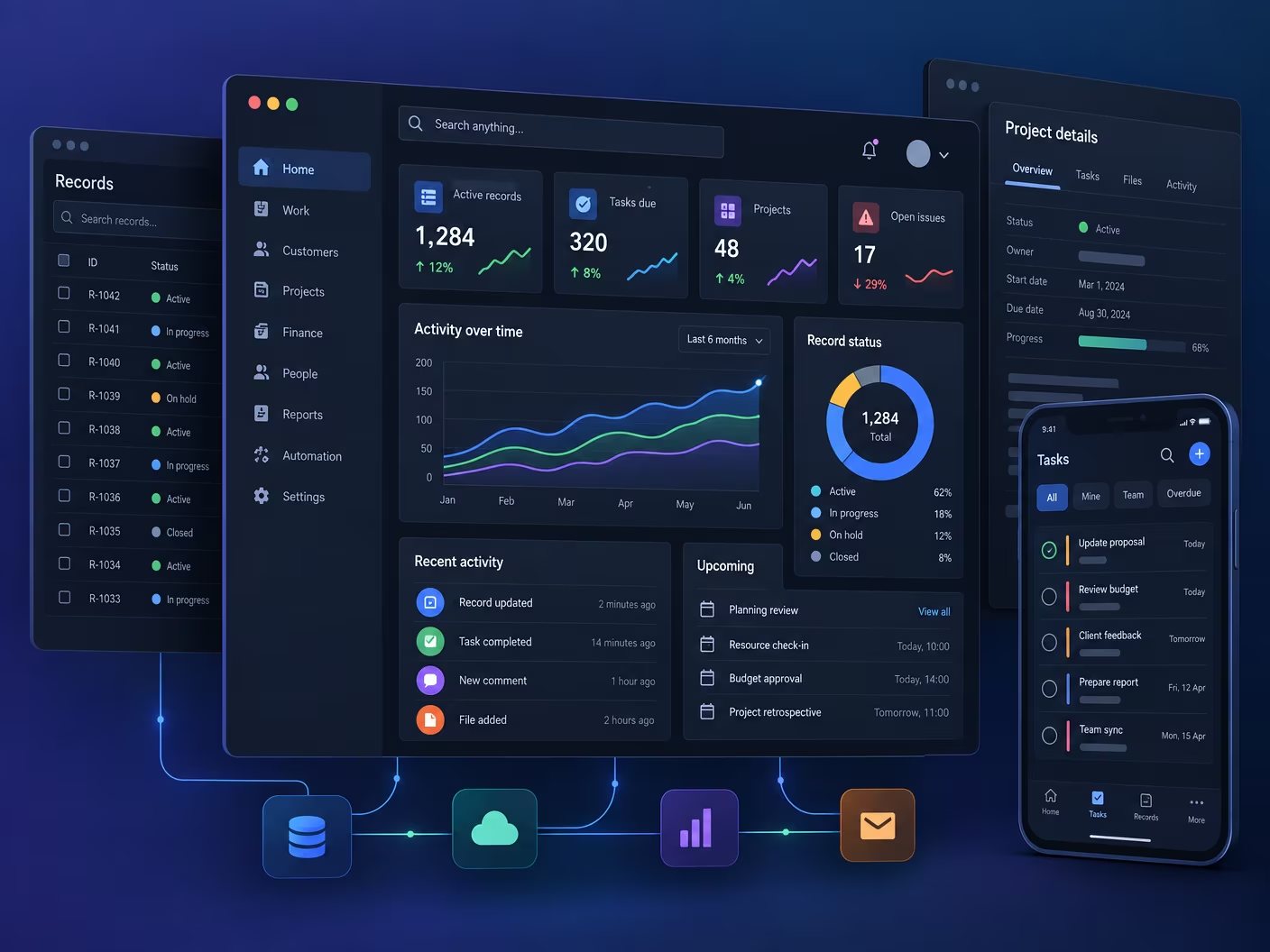
Enterprise Applications Development
Your enterprise applications are not just tools. They are the structure through which your team works, data moves, and decisions get made. When they do not fit how your business actually operates, every process they touch gets slower and more expensive.
The problem most businesses run into is not that enterprise software is bad. It is that generic solutions are built for everyone, which means they are optimized for no one. You end up adapting your operations to fit the software instead of the other way around.
We build and customize enterprise applications around the actual way your organization works. That means systems that fit your workflows, connect across departments, and make your people faster instead of working around them.
Custom Enterprise Applications Built Around Your Operations
Whether you are building a new internal platform, improving an existing system, or customizing a CRM or ERP to better fit your business, the core challenge is always the same: alignment.
Most enterprise applications fail to deliver their expected value because they were deployed without being properly mapped to how the business runs. We close that gap.
We build enterprise applications that:
- Align to your actual operations and business rules
- Connect across departments and integrate with your existing tools
- Give your team a system they use because it works, not one they work around
Systems That Keep Up as Your Business Grows
As your business grows, the number of moving parts multiplies. More teams, more processes, more data, more systems that need to stay in sync. Without the right structure in place, this creates fragmented processes, inconsistent data, and growing overhead.
A well-built enterprise system solves these problems at the foundation. It brings order to how your business runs... consistent processes, reliable data, and the capacity to scale without adding operational complexity.
How can this Benefit Your Business?
Enterprise applications fail on the unglamorous things: permissions, audit trails, what happens at ten times the current load. Those are the parts we design first.
It holds up when the business grows into it
Architecture decisions made for today's volume become next year's outage. We plan capacity and failure modes before writing features.
Access control that survives an audit
Roles, permissions and logging are built in rather than retrofitted. Retrofitting them is how compliance projects turn into rewrites.
Integrated with what you already run
New enterprise software that cannot talk to your ERP, CRM and data warehouse creates another island. Integration is part of the build, not a later phase.
What We Build With, and What We Integrate
SWARECO builds enterprise applications on Ruby on Rails with React or React Native front ends, TypeScript throughout, and PostgreSQL as the system of record. Sidekiq runs the scheduled and long-running work that enterprise workflows depend on, Redis handles caching and queues, and Elasticsearch or OpenSearch carries search, real-time reporting and analytics load that would otherwise degrade the primary database. Deployment is Docker containers on AWS or Heroku, with Playwright covering the workflows the business cannot afford to have break.
Integration is part of the build
A new enterprise application that cannot exchange data with what you already run creates another island, which is the problem it was meant to solve. We connect to Salesforce, HubSpot, NetSuite and Shopify as a matter of course, and to custom or legacy systems through whatever they expose. Where a legacy system has no API, we build a thin one in front of it rather than pointing the new system at somebody else's database schema and inheriting it permanently.
Where AI belongs in enterprise apps
Two places, both earned. In delivery, SWARECO uses AI-assisted code comprehension to map a legacy codebase or an undocumented database before the rebuild starts, which shortens the riskiest phase of enterprise app development. In the product, where a business function genuinely benefits — document extraction, classification, routing — we integrate the OpenAI, Anthropic Claude or Google Gemini APIs behind the same permission model as everything else. What we do not do is bolt AI onto an enterprise system as a feature for its own sake: an AI summary of bad data is a faster way to be wrong.
Types of enterprise applications we build
The recurring shapes: customer relationship management systems that model a sales process the generic CRM cannot, operations and supply chain management tools that track inventory and fulfillment in real-time, data management platforms that give large organizations one version of the truth, and workflow software solutions that connect business functions which currently coordinate by email. Complex business rules are the common thread — that is what makes them worth building rather than buying, and what raises both team productivity and customer satisfaction when the system finally matches the operation.
Application security, audit and compliance
The security measures are standing, not optional: role-based access control, single sign-on against your existing identity provider, and an append-only audit trail of who changed what and when. Where the business is subject to a specific regime, tell us which one at the start: the evidence a given framework expects changes the data model and the logging, and those are the two things that are most expensive to change afterwards.
Custom build, or customizing what you have
Not every business need requires new enterprise application software. Extending an existing CRM or ERP platform is often faster and cheaper, and we do that work too — custom objects and flows in Salesforce, custom records and scripts in NetSuite. The honest test is whether the business process you need is a variation of what the platform already models, or genuinely different from it. Fighting a platform's data model with customization is more expensive over five years than building the thing that fits, and recognizing which situation you are in is most of the value of the first conversation.
Industries We Serve
Deep industry expertise combined with cutting-edge technology to solve your unique challenges
Why Work With Us for Enterprise Applications
We do not deliver a system and hand it off. We take ownership of the outcome... which means we understand your business before writing any code, stay involved during deployment, and remain accountable for how the system performs in real use.
Our approach is practical and results-focused. Every decision is driven by how the system will be used daily, how it must grow, and how it supports the business long term. That focus on real fit... rather than generic templates... is what produces systems your team actually relies on.
These companies have relied on us to help expand their engineering teams with top talent who make a real impact.
Companies that trusted us to build and run their engineering.






Case Study
Real results for real clients. Discover how we've helped businesses achieve their digital transformation goals

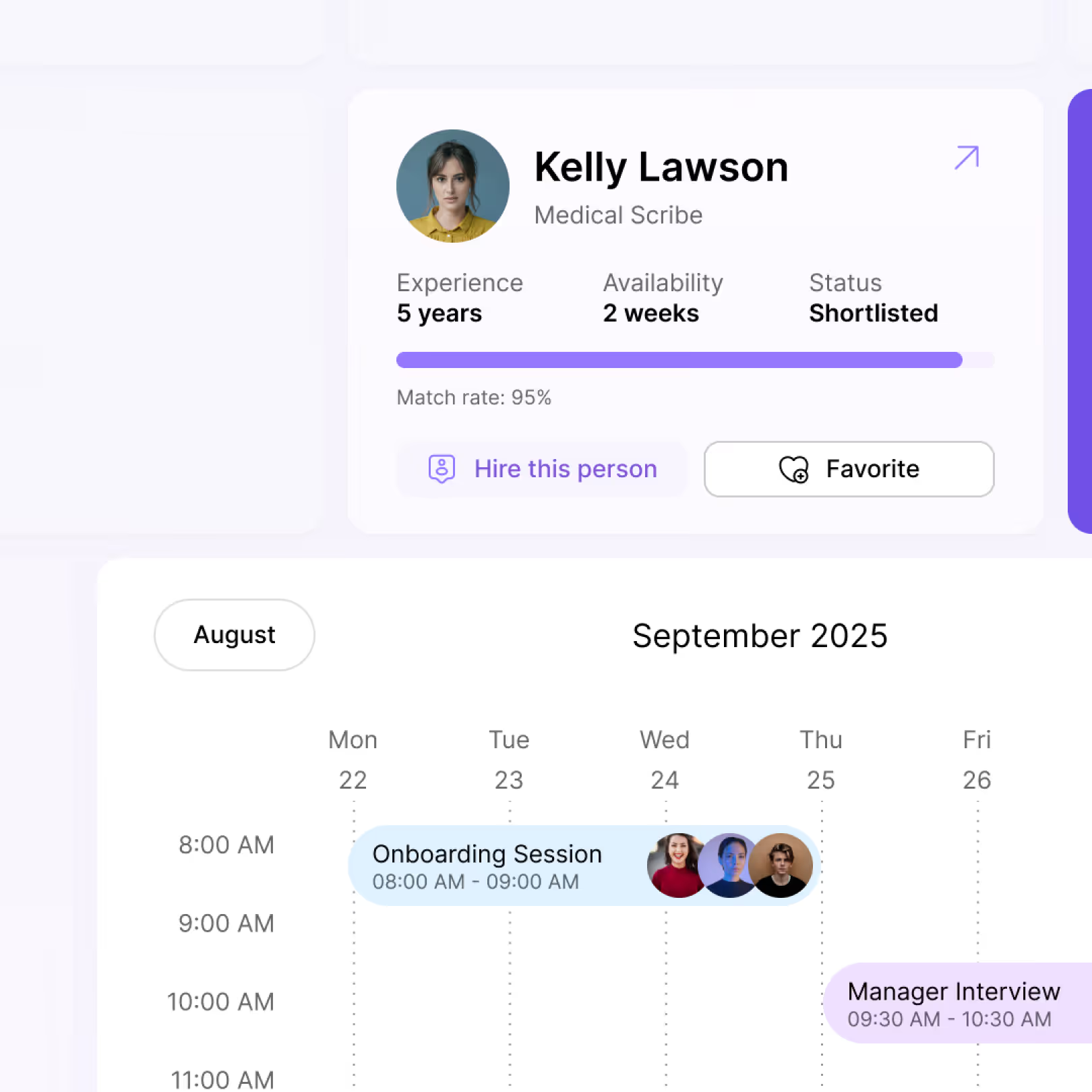
Staffing for Doctors: A Scalable Client Acquisition Platform for a Growing Healthcare Staffing Company
SWARECO built a client acquisition platform for a 25-person healthcare staffing company: standardized workflows, automation and room to scale.
FAQs
What is enterprise application development?
It is the process of building custom software systems that support internal business operations... managing customers, inventory, HR, finance, or operations... and connecting those functions across departments and tools.
How do I know if I need application development?
If your team relies on manual coordination, disconnected spreadsheets, or multiple tools that do not talk to each other, a custom enterprise system can consolidate that into one reliable platform built for how you actually work.
How long does an enterprise application project take?
Most projects take between 10 and 24 weeks depending on complexity, the number of integrations required, and the scope of customization. We set clear milestones at the start.
Can you integrate with our current systems?
Yes. Connecting to existing CRMs, ERPs, databases, and third-party platforms is central to how we build enterprise applications.
Will the system scale as we grow?
Yes. Scalability is designed into the architecture from the beginning, so adding users, departments, and data volume does not require rebuilding.
Do you provide ongoing support?
Yes. We offer maintenance, monitoring, and continuous improvements after launch.
How do you ensure security?
We follow best practices for secure development, access control, and data protection from the start of every project.
Can you improve or extend our existing enterprise system?
Yes. Depending on the current state of your system, we can optimize, extend, or rebuild specific components while preserving the business logic and data that still work.
Do you work with cloud infrastructure?
Yes. We deploy on AWS, Google Cloud, and Azure, and can work with hybrid or on-premise environments where required.
Can this reduce manual work across our operations?
Yes. Automation and workflow integration are core to how we build enterprise applications. Reducing the manual coordination your team does every day is one of the most common outcomes.
Other Services
You bring the operation. We build the system to run it.
Tell us how your business works and where your current systems are falling short. We will build a system that fits.