
Mobile App Development
Native and hybrid apps built for real users on real devices.
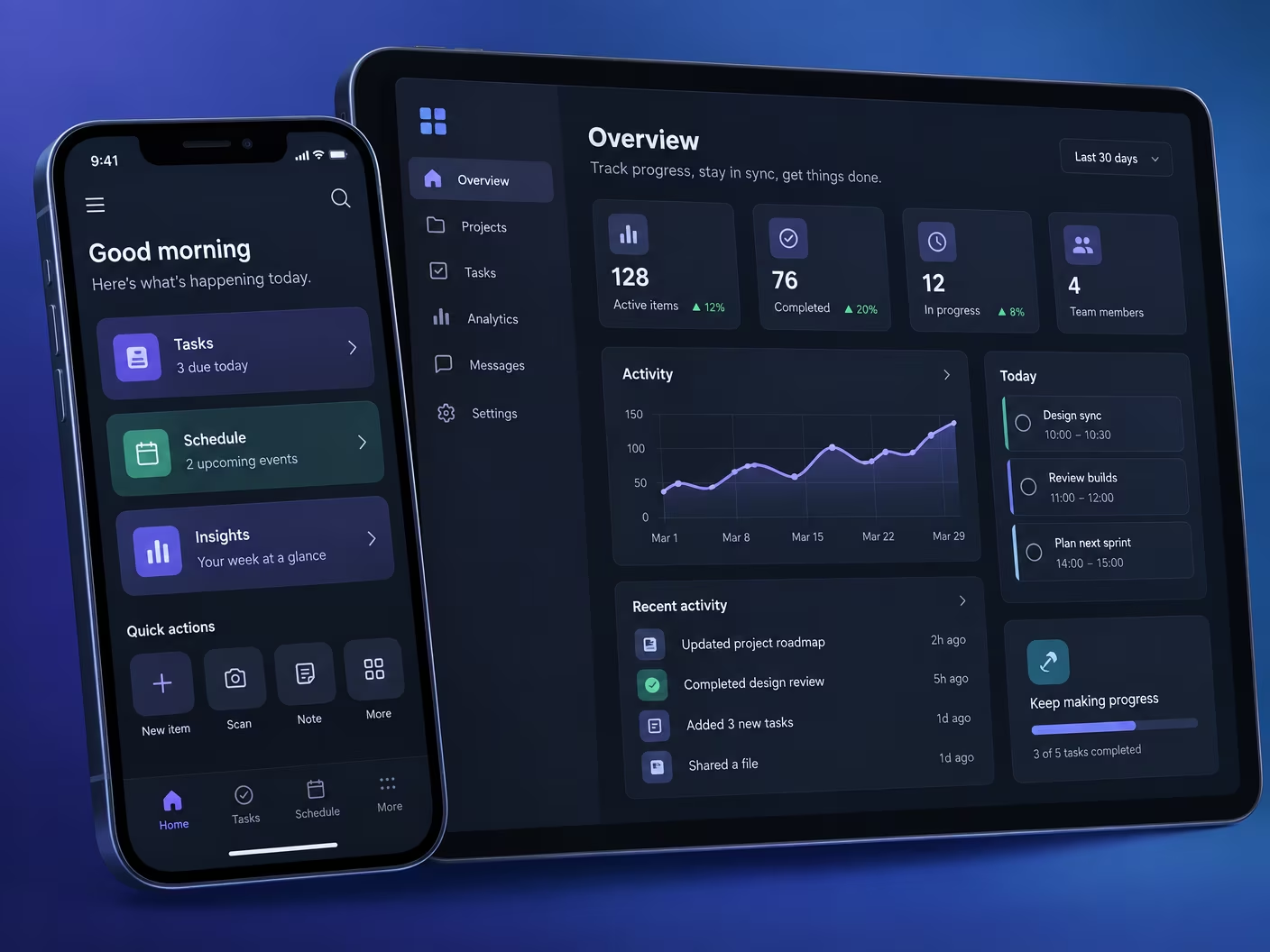
Mobile App Development Services
Mobile is often the primary way users interact with your product or service. Whether they are customers, employees, or partners, people expect apps to be fast, reliable, and genuinely useful on their phone. When they are not, people stop using them.
The problem with many mobile apps is not the idea behind them. It is that they were built quickly, without the right architecture, and without thinking seriously about how they would be used in the real world. The result is apps that slow down under load, break on certain devices, drain battery, and become expensive to maintain or update.
We build custom mobile applications that work the way your users actually work. Reliable across devices. Fast under real conditions. Built with the architecture to grow after launch without needing a complete rebuild.
Custom Mobile App Development Built for How People Actually Use It
Business needs vary widely. Some companies need consumer-facing apps for sales, booking, or content. Others need internal tools for field service, inventory, reporting, or team coordination. Enterprise mobile applications often require additional layers of security, compliance, and integration with existing business systems.
We keep three priorities in focus throughout every build: the end user, the core business process the app supports, and the room it needs to grow.
We evaluate native iOS, native Android, and cross-platform options based on your performance requirements, budget, and timeline... and recommend what fits, not what is easiest for us to build.
Built for How People Actually Use Mobile
Mobile users expect apps to launch instantly, respond without lag, and keep working even when connectivity is patchy. At the same time, your business needs to handle more users, more data, more features, and tighter security over time.
Apps that were not built for this reality show it quickly. They slow down, crash under load, drain battery, and become costly to update. These problems damage user trust and raise your long-term costs.
We design and build mobile apps that handle real-world usage patterns, support secure data handling, and can be updated without major rework as your business evolves.
How This Benefits Your Business
Mobile is where small friction becomes uninstalls. The difference between an app people keep and one they delete is usually decided before any code is written.
Built from how people actually use it
We watch the real workflow first, on the device, in the conditions it will be used in. Field staff on bad signal need different software than someone at a desk.
Native where it matters, cross-platform where it does not
The choice follows your performance and budget requirements, not our preference. Both are appropriate answers to different problems.
It survives the next OS release
Apple and Google break things annually. Maintained dependencies and real device testing mean that is a scheduled update rather than an emergency.
The Mobile Stack, and When Not to Build an App
SWARECO's mobile app development services run on a deliberately small stack: React Native and TypeScript for the mobile apps themselves, Ruby on Rails APIs on PostgreSQL behind them, Sidekiq and Redis for background jobs and push delivery, Elasticsearch or OpenSearch where in-app search matters, and Docker containers on AWS or Heroku underneath. Playwright covers the end-to-end flows the business cannot afford to break. One stack, used repeatedly across mobile and web software development, is why our estimates hold.
How we build mobile apps
The development process starts with a decision most mobile app development companies skip: whether you need a mobile application at all. If the product has no business on a phone - no camera, no location, no push notifications, no offline use - a responsive web app is cheaper to build and to keep alive, and we will say so before quoting. Plenty of good mobile apps should have been websites, and the reverse is rarer than agencies admit. Custom mobile apps earn their cost when they use what the device actually offers.
When an app is the right answer, SWARECO builds one codebase, not two. We write custom mobile applications in React Native with TypeScript, which ships a native app experience on iOS and Android from a single codebase - roughly 30 to 40 percent less engineering than parallel native mobile builds, without the compromises of a hybrid app running in a web view. The exceptions are real but rare: games, heavy real-time graphics, or hardware-level work still justify fully native development, and we will tell you when your mobile app development project is one of them.
The backend is half of every mobile application, and it is the half that usually fails first. Our mobile app developers build the API in Ruby on Rails on PostgreSQL, with Sidekiq handling the background work - push notifications, feed generation, sync - and Redis for queues and caching. The app assumes the network will disappear, because on phones it does: requests retry, writes queue offline, and state reconciles when the connection returns.
App store release is part of the work, not an afterthought. We manage App Store and Google Play submission, review requirements, staged rollouts and beta distribution, and we design the release cadence so a rejected review does not block a critical fix. Every release candidate passes an automated Playwright suite against the API plus device testing on the phones your users actually own.
The cost of mobile app development is driven by three things: how many screens carry real logic, how much the backend has to do, and how far offline support goes. A focused first release typically runs 12 to 20 weeks. We scope app development projects so the first version ships something measurable, then iterate on what usage data shows rather than what a roadmap guessed a year earlier. That is also the cheapest way to develop a mobile app: ship the version that answers the question, measure, extend.
What your app connects to
Most business mobile apps are a front end to systems that already exist. We integrate Salesforce and HubSpot for customer data, Shopify for commerce, NetSuite for orders and finance, and Google services for identity and maps. Where a feature genuinely benefits from AI - support triage, document capture, in-app assistance - we integrate the OpenAI, Anthropic Claude or Google Gemini APIs server-side, behind your permission model, so keys and prompts never live in the app binary.
Native app, hybrid app, or web app
The honest hierarchy for most businesses: a web app when reach matters more than device features, React Native when you need a real native app on both platforms without two teams, and separate native codebases only when the product pushes the hardware. Mobile app development companies that default to the most expensive option are selling engineering hours, not judgment. The right answer falls out of three questions: what device features the product needs, who maintains it in year two, and what the cost of mobile app development buys compared to the web version of the same idea.
The mobile apps we are asked to build
Three shapes recur. Customer-facing mobile apps for booking, ordering and account management, where retention is the metric that matters. Internal mobile apps for field teams - inspections, deliveries, on-site data capture - where offline behavior decides adoption. And companion mobile apps that extend an existing web product to the phone, where the custom mobile work is mostly about doing less, better. Across all three, app development projects succeed on the same fundamentals: a backend that tells the truth, an app store presence that stays current, and a first release small enough to learn from.
Comparing mobile app development companies
Most mobile application development services quote from the same menu, so the separating questions are about what happens when things go wrong. Ask who owns the app store accounts and the source code - with SWARECO, you do, from day one. Ask how the estimate was produced: custom mobile app development priced before anyone has mapped the backend is a guess wearing a spreadsheet. Ask what the team's last three app development projects shipped in their first release, because the best mobile app development solutions are the ones that launched small and grew on evidence, not the ones with the longest feature list. And ask how the application development services handle the year after launch - the answer predicts your total cost better than the build quote does. A development partner who answers all four plainly is worth more than one who leads with a portfolio of screenshots.
What happens after launch
App stores add a maintenance obligation web software does not have: annual OS releases, deprecated APIs, and review policies that change without notice. SWARECO keeps shipped apps current as part of the engagement - dependency updates, OS compatibility, crash monitoring with alerting - so the mobile application that launched clean is still clean when iOS 21 arrives. Handover, where preferred, includes the release runbook, store account access, and the test suite, not just the repository.
Industries We Serve
Deep industry expertise combined with cutting-edge technology to solve your unique challenges
Why Work With Us for Mobile App Development
We build tools people actually use. Our focus throughout every mobile project is on real-world performance: how the app behaves on actual devices, under real network conditions, and with real user behavior patterns.
We build around the way your business and users operate rather than fitting them into a template. This approach improves adoption and reduces the long-term cost of maintaining and growing the app.
These companies have relied on us to help expand their engineering teams with top talent who make a real impact.
Companies that trusted us to build and run their engineering.






Case Study
Real results for real clients. Discover how we've helped businesses achieve their digital transformation goals

FAQs
What is mobile app development?
It is the full process of planning, designing, building, testing, and maintaining a custom application for smartphones and tablets, on iOS, Android, or both.
Should I choose native or cross-platform development?
Native apps generally offer the best performance and access to device features. Cross-platform options like React Native or Flutter reduce cost and time for many projects without a significant performance trade-off. We recommend the right approach after reviewing your specific goals, budget, and timeline.
How long does it take to build a mobile app?
Simpler apps typically take 12 to 16 weeks. More complex applications with integrations, offline capability, and enterprise features range from 20 to 28 weeks. We define clear milestones at the start and keep you informed throughout.
Can the app connect to our existing software?
Yes. We regularly integrate mobile apps with CRMs, ERPs, internal databases, payment systems, and other business tools.
Does the app support offline use?
We can include offline functionality where it is useful, so users can continue working without connectivity and sync automatically when a connection is restored.
Do you handle App Store and Google Play submission?
Yes. We prepare the required assets, manage the review process, and complete submissions to both stores.
How do you ensure app security?
Security is built in from the start with encryption, secure authentication methods, secure API communication, and vulnerability testing throughout development.
Can you update or modernize an existing app?
Yes. We review existing code, assess the current architecture, and determine what can be improved versus what needs to be rebuilt. We can also migrate older apps to newer frameworks.
Do you offer maintenance after launch?
Yes. We offer ongoing support covering monitoring, bug fixes, OS compatibility updates, and feature enhancements.
Will a well-built app improve customer or employee engagement?
Yes. An app that is fast, intuitive, and reliable encourages regular use. The apps that get abandoned are the ones that feel slow or unreliable within the first few sessions.
Other Services
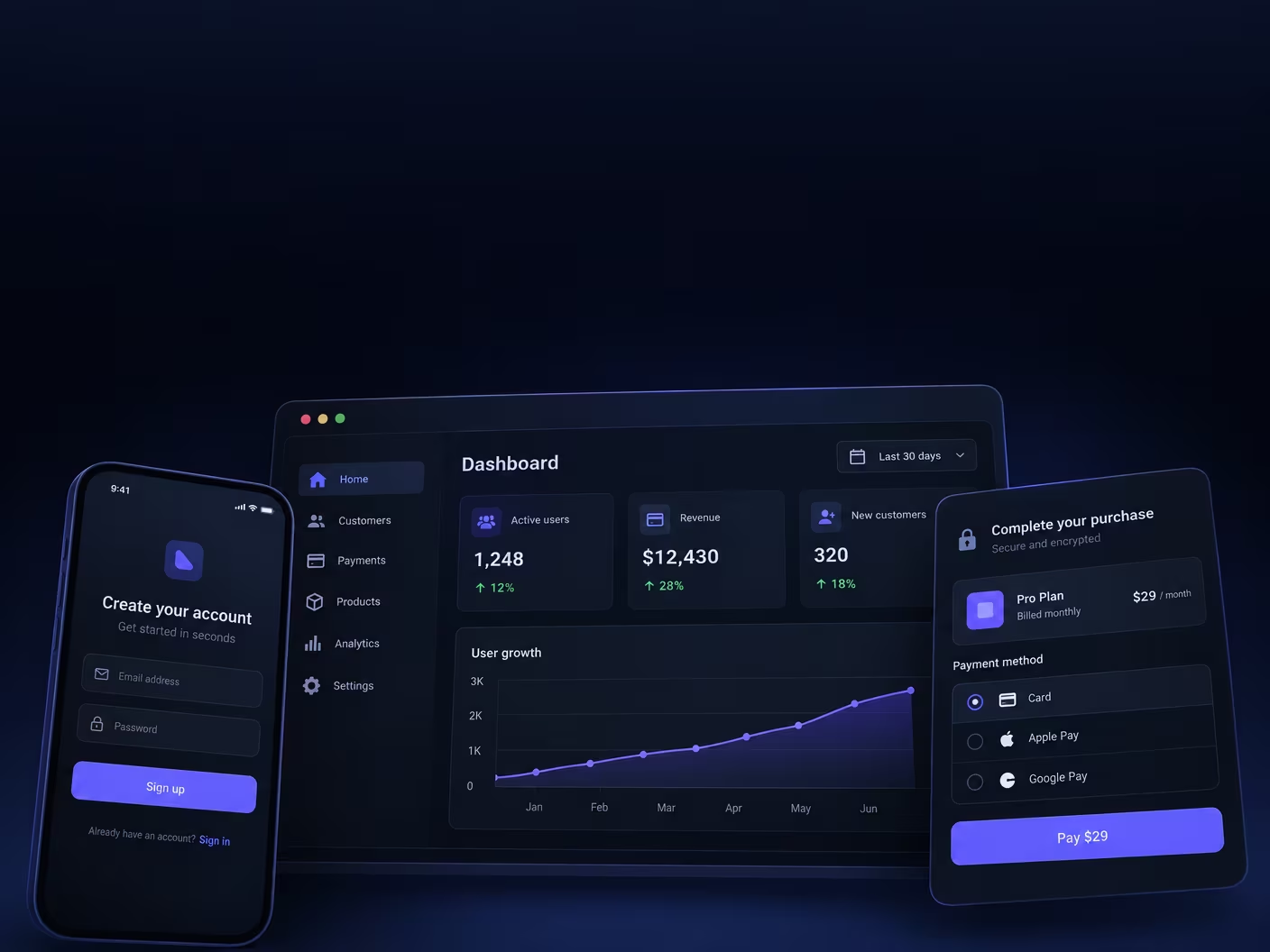
Your idea deserves an app that holds up.
Tell us what you are building and who is going to use it. We will work out the right approach and build it properly from the start.