
Technical Recruiting for AI-Native Engineers
We find and vet AI-native, product-minded engineers for your team through a multi-round interview run by senior engineers.
A software developer recruitment agency that tells you why, not just whether
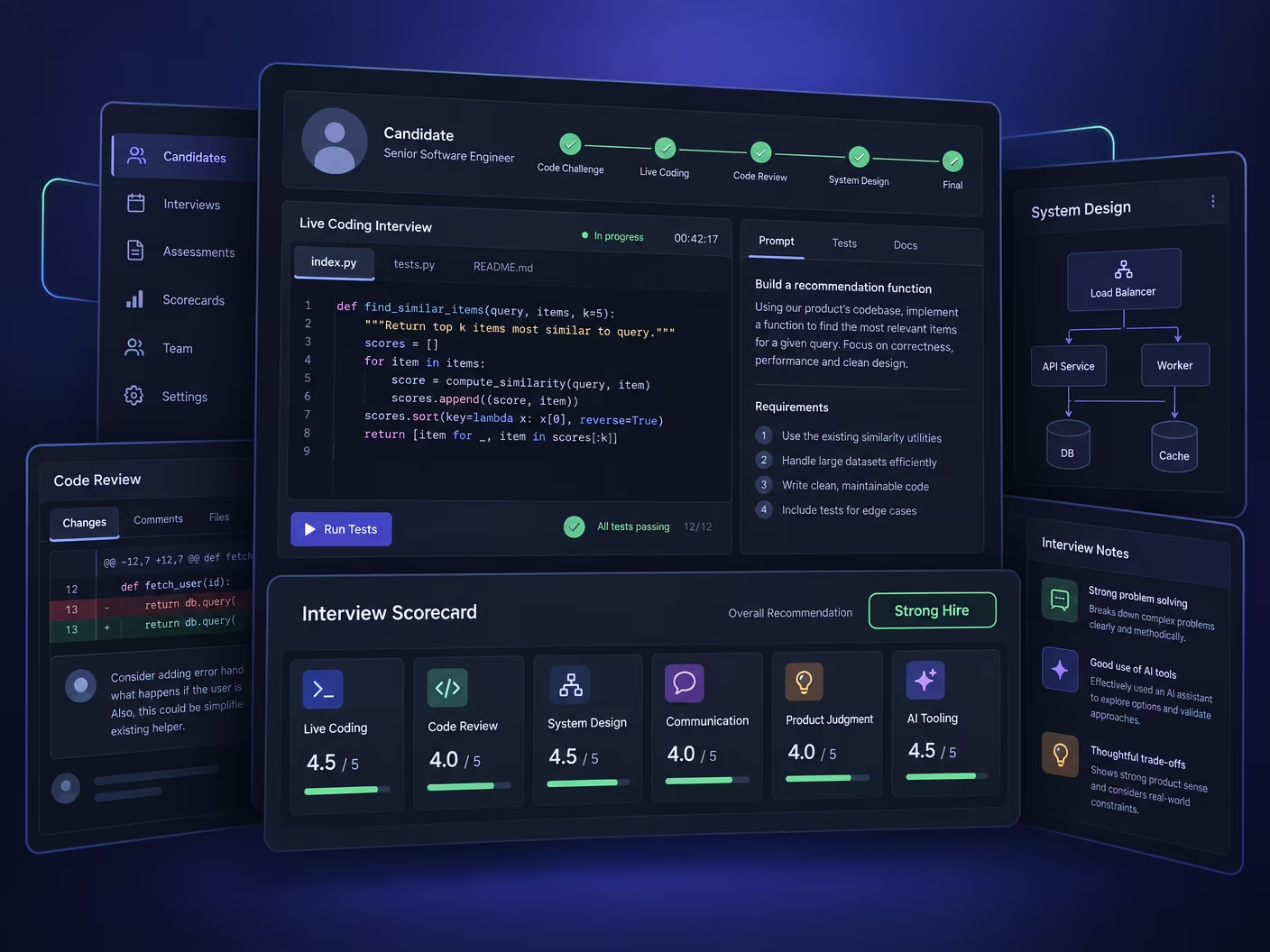
Most technical recruitment ends with a shortlist and a shrug. The recruiter sends over names, a resume summary and a selectivity statistic, and the actual judgment, is this person good enough to hire, is handed back to you to make in a 45-minute call. SWARECO does the opposite. We source the candidates, we run three real technical rounds against your own codebase, and we hand you a scorecard that says what each person was strong and weak at, on seven named dimensions, with the evidence attached.
We are an engineering company that recruits, not a recruitment agency that subcontracts engineering. The people running the interview are the same senior engineers who build software for our clients, which is why the write-up says something a hiring manager can act on.
The engineer joins your team, not ours
This is technical recruiting, not staff augmentation. The engineer we recruit signs with you, sits on your payroll and reports to you. Staffing agencies keep the contract and rent you the person; we do not. If what you want is a team we run and stay accountable for, that is a different service, our dedicated nearshore teams, and we will say so rather than sell you the wrong one.
How we source candidates
Sourcing is half of technical recruitment and the half most recruitment agencies outsource to a database query.
We recruit from the same funnel that staffs SWARECO itself: a fully remote engineering company of around thirty people, hired primarily across Latin America for timezone overlap with US teams, and heavily referral-driven. Our own applications arrive from roughly 250 countries and are screened for English proficiency before any technical round.
That matters for one practical reason: we are hiring against the same bar for you that we hire against for ourselves, and we know what the market pays and what it will accept, because we are in it every month. A recruiter who has never had to keep the engineer they placed is optimising for a different outcome than you are. They are paid when you hire; we are judged on whether the hire works out.
Nearshore, when it fits
Most of the software engineers we recruit are in Latin America, working US hours. If you need someone in a specific US metro we will say so early rather than stretch. Nearshore recruitment works when the role is genuinely remote and the overlap matters more than the postcode.
What the multi-round technical interview covers
The process is the product here, so it is worth being specific about it. Three rounds, roughly four and a half to six and a half hours of senior engineering time per candidate who reaches the end.
Round one, live coding, two to three hours. The candidate works on a challenge generated from your own repository, not a puzzle from a question bank. We watch how they get context before writing code, how they handle the parts of the codebase nobody documented, and what they do when the first approach stops working.
Round two, pull request review, one to two hours. The candidate reviews real code and we read the review. This is the round that separates a software engineer who can write from one who can also raise the standard of everyone around them, and it is the one most hiring processes skip entirely.
Round three, design and leadership, about ninety minutes. An open design problem, discussed. We are listening for tradeoff articulation, consequence awareness and whether the candidate asks about the customer before proposing an architecture.
What makes this different from every other tech recruiting firm
You will know why this person passed
Every candidate is scored on the same seven things, and the scorecard is what you receive: context before code, meaning do they understand the system before changing it; AI fluency, meaning can they get good work out of an AI assistant and verify it; tradeoff articulation; consequence awareness; product and customer awareness; review and feedback; and initiative.
Look at what competitors publish and you will notice something. The tech recruiting market sells pool size, time-to-shortlist and a selectivity ratio. Almost nobody states what they actually evaluate, and nobody evaluates how a developer works with AI. That is the gap this service exists in.
The only interview that scores how a developer works with AI
AI tools are allowed and encouraged in every round, and we score how well they are used. Banning them tells you how someone works in a world that no longer exists. Watching an engineer drive an AI assistant well, and catch it when it is confidently wrong, tells you how they will actually work on Monday. AI fluency is one of the seven dimensions, not a bonus point.
Challenges built from your codebase, not a puzzle bank
The live coding challenge is generated from your own repository. That is the difference between finding out whether a candidate can solve an abstract puzzle and finding out whether they can get context in your system, work around the parts nobody documented, and make a change you would merge. We never reuse a challenge built from your repository anywhere else.
Product thinking and communication, scored rather than assumed
Two of the seven dimensions are about whether an engineer asks who the change is for before proposing an architecture, and whether they can make a case another engineer will accept. These are the things hiring managers say they want and almost never test for, because testing for them takes a senior engineer's time in the room.
What you receive
For each candidate who completes the process: the scorecard across all seven dimensions, the artefacts they produced, the reviewer's written reasoning, and a recommendation with the reservations stated. For the search overall: what we saw in the market at your level and price, and where the bar you set is unrealistic, if it is.
What we never send is a list of profiles to browse. We do not operate a candidate pool or a marketplace, and we do not forward a CV we have not put through the process.
Industries We Serve
Deep industry expertise combined with cutting-edge technology to solve your unique challenges
Roles we recruit for, and how we treat candidates
The stack is whichever one you run. We most often recruit backend, frontend and full-stack software engineers on Ruby on Rails, React and TypeScript, Node and Python, with PostgreSQL underneath, plus QA automation engineers, DevOps and platform engineers, and security-minded engineers where a cybersecurity background is part of the role rather than a separate hire. We also recruit the first engineer for a startup, which is a different search from the fifth: that hire sets the bar every later one is measured against, so we weight initiative and product awareness harder.
What we do not do is recruit outside engineering. If you need a designer, a product manager or a salesperson, a general recruiter will serve you better than we will, and we will say so.
A job seeker who has given six hours to your interview process has earned a reply, so every candidate who reaches a technical round gets a decision and the reasoning behind it, whichever way it goes. This is not only courtesy. The engineers worth hiring compare notes, and a recruitment process with a reputation for silence stops attracting them within about two quarters. We never share a candidate's work with another client.
These companies have relied on us to help expand their engineering teams with top talent who make a real impact.
Companies that trusted us to build and run their engineering.






Case Study
Real results for real clients. Discover how we've helped businesses achieve their digital transformation goals
FAQs
How does SWARECO find and vet software engineers?
We source from our own network and pipeline — the same one that staffs SWARECO's engineering teams, weighted toward Latin America and heavily referral-driven — then run every candidate through a three-round technical interview conducted by senior engineers. Sourcing and vetting are one service here; we do not hand over an unvetted shortlist. Each candidate who finishes is scored on seven named dimensions and comes with written reasoning.
What does the multi-round technical interview cover?
Three rounds and four and a half to six and a half hours of senior engineering time per candidate: live coding on a challenge generated from your own repository, a pull request review where we assess the quality of the candidate's review rather than their code, and a design and leadership discussion. Across all three we score context before code, AI fluency, tradeoff articulation, consequence awareness, product and customer awareness, review and feedback, and initiative.
Are candidates allowed to use AI tools during the interview?
Yes, in every round, and we score how well they do it. An engineer who can direct an AI assistant, verify its output and catch it when it is wrong is more valuable than one who cannot, and a recruitment process that bans the tools measures a job nobody has any more. AI fluency is one of the seven dimensions on the scorecard, not a bonus point.
How is technical recruiting different from staff augmentation or a managed team?
In technical recruiting the engineer joins your company and your payroll, and our work ends when they do. Staffing agencies and staff augmentation firms keep the employment relationship and bill you for access to the person. A managed team is our own service where SWARECO supplies and runs an entire engineering function and stays accountable for delivery. Three different things; we will tell you which one your situation actually calls for.
How long does a technical recruitment search take?
It depends far more on how tightly the role is defined than on the size of any pool. A clear role with a real codebase to build the challenge from moves quickly; a role still being argued about internally does not, and no recruiter can fix that from the outside. We will tell you at the start which one you have, because a search that starts before the role is settled wastes your time and ours.
Other Services
Send us the role and the repo
The first coding challenge is generated from your own code, so the conversation starts with what the work actually looks like rather than with a job description.